
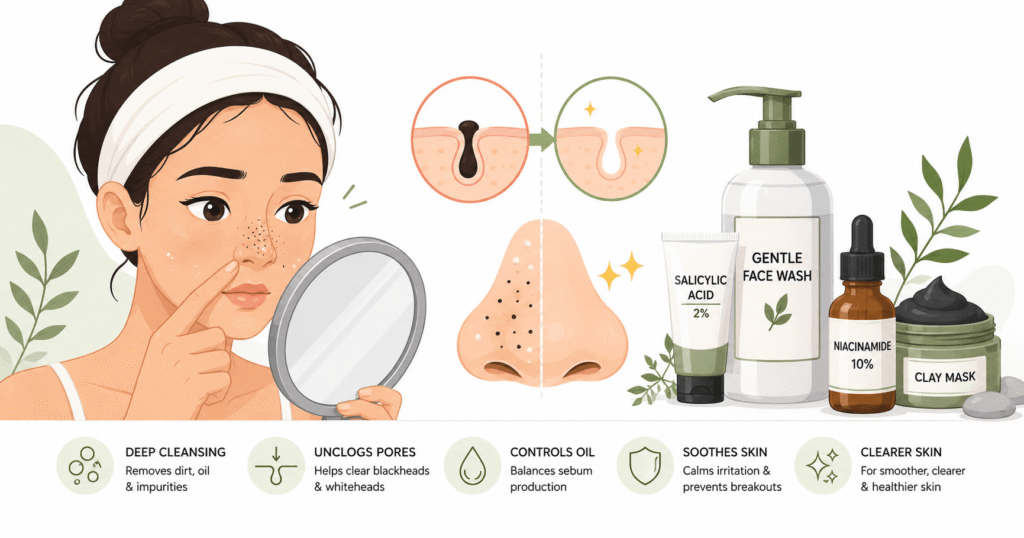
If you have ever stood in front of a mirror and wondered why those tiny bumps refuse to leave your nose, chin, or forehead, you are not alone. Whiteheads and blackheads are the most common skin concerns in India, especially among teenagers and young adults. The right face wash for whiteheads and blackheads can be the first and most important step toward clearer skin—but only if you know what to look for.
Most people grab the first “anti-acne” face wash they see. They scrub harder. They wash more often. And when nothing changes, they assume their skin is simply “bad.” The truth is simpler: most face washes are not designed to treat comedones. They clean the surface but do nothing for the clogged pores underneath.
This guide is different. We will explain exactly how whiteheads and blackheads form, which ingredients actually work, how to match a face wash to your skin type, and the common mistakes that make the problem worse. Every recommendation is based on dermatology science, not marketing hype. Whether you have oily, dry, combination, or sensitive skin, you will leave this article knowing exactly what your face wash should contain—and how to use it for the best results.
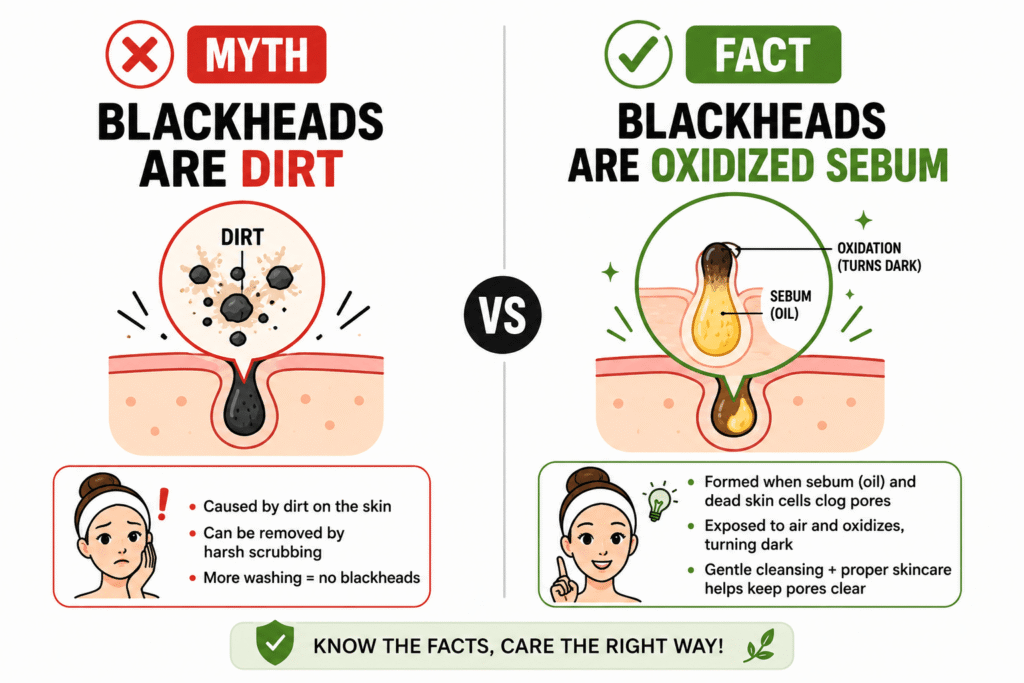
Did You Know? Blackheads are not caused by dirt. They turn dark because the trapped sebum and dead skin cells oxidize when exposed to air. Washing your face more often will not remove them if your cleanser lacks the right active ingredients.
What Are Whiteheads and Blackheads? (And Why Your Face Wash Matters)
The Science Behind Comedones
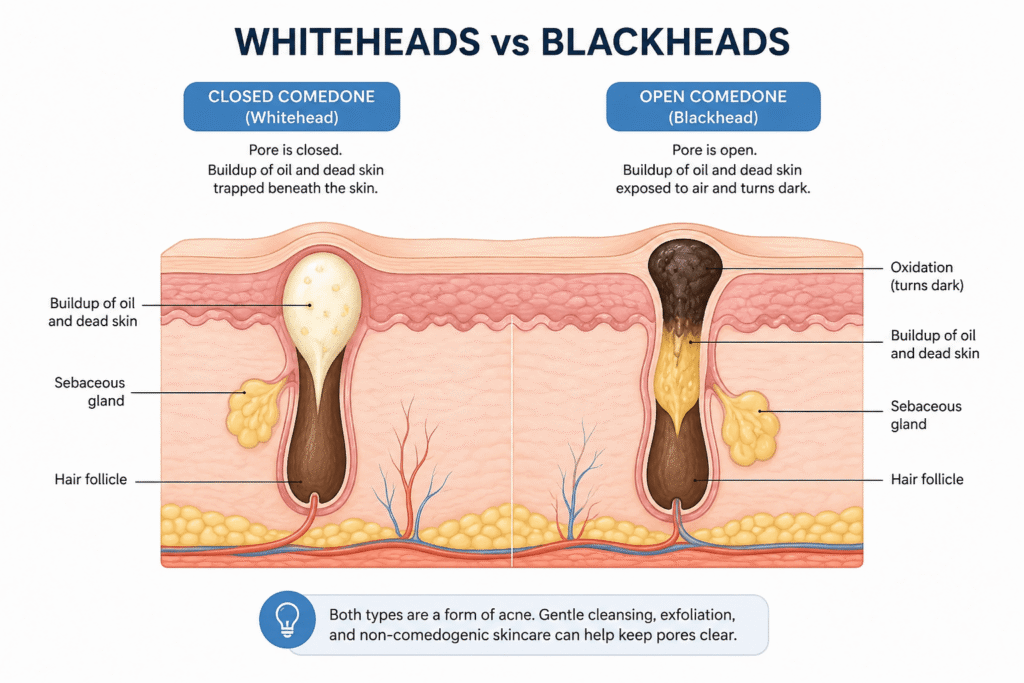
Whiteheads and blackheads are both types of comedones—clogged hair follicles filled with excess oil (sebum) and dead skin cells. The difference lies in whether the pore is open or closed.
Open Comedones (Blackheads)
When a pore remains open, the trapped material inside is exposed to oxygen. This causes oxidation, which turns the plug dark brown or black. Blackheads are not dirt. They are simply oxidized sebum and keratin. This is why vigorous scrubbing or over-washing does not help—the problem is deep inside the pore, not on the surface.
Closed Comedones (Whiteheads)
When a pore is completely blocked by a thin layer of skin, the trapped material stays white or flesh-colored. These are whiteheads. They are harder to extract than blackheads because there is no opening. Picking or squeezing them often pushes the contents deeper, causing inflammation and eventually a red, painful pimple.
Why Regular Face Wash Won’t Cut It
A standard face wash removes surface oil, sweat, and pollution. But whiteheads and blackheads form inside the pore, where regular cleansers cannot reach. To treat them effectively, your face wash needs active ingredients that can:
- Penetrate the pore lining (salicylic acid)
- Dissolve the oil-and-skin-cell plug (BHA/AHA)
- Reduce excess sebum production (niacinamide)
- Prevent bacterial overgrowth (benzoyl peroxide, tea tree oil)
Without these ingredients, you are simply cleaning the surface while the real problem stays untouched.
Face Wash for Whiteheads and Blackheads: Key Ingredients That Work
Not all “anti-acne” face washes are equal. The ingredient list tells the real story. Here are the science-backed ingredients that actually work for whiteheads and blackheads.
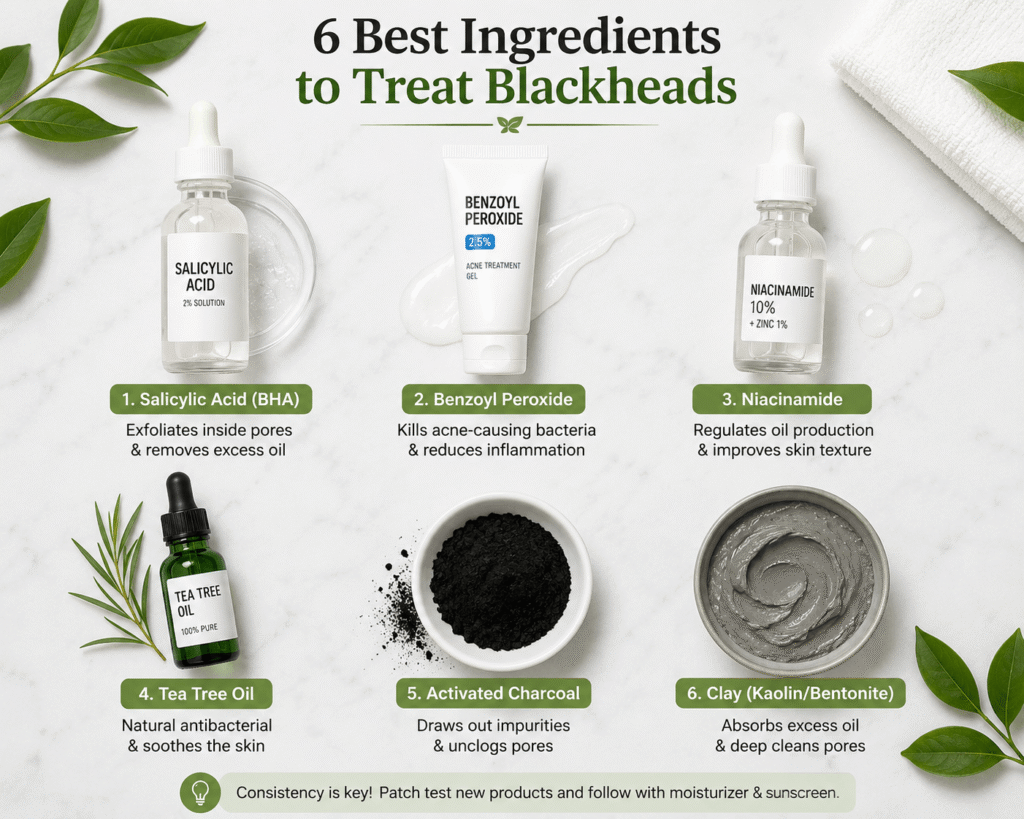
Salicylic Acid (BHA) — The Gold Standard
Salicylic acid is a beta-hydroxy acid (BHA) and the most effective ingredient for blackheads and whiteheads. Unlike AHAs, which work on the skin’s surface, salicylic acid is oil-soluble. This means it can penetrate deep into the pore, dissolve the sebum plug, and exfoliate from the inside out.
What the science says: Studies show that salicylic acid at concentrations of 0.5% to 2% significantly reduces comedonal acne by breaking down the bonds between dead skin cells and unclogging pores.
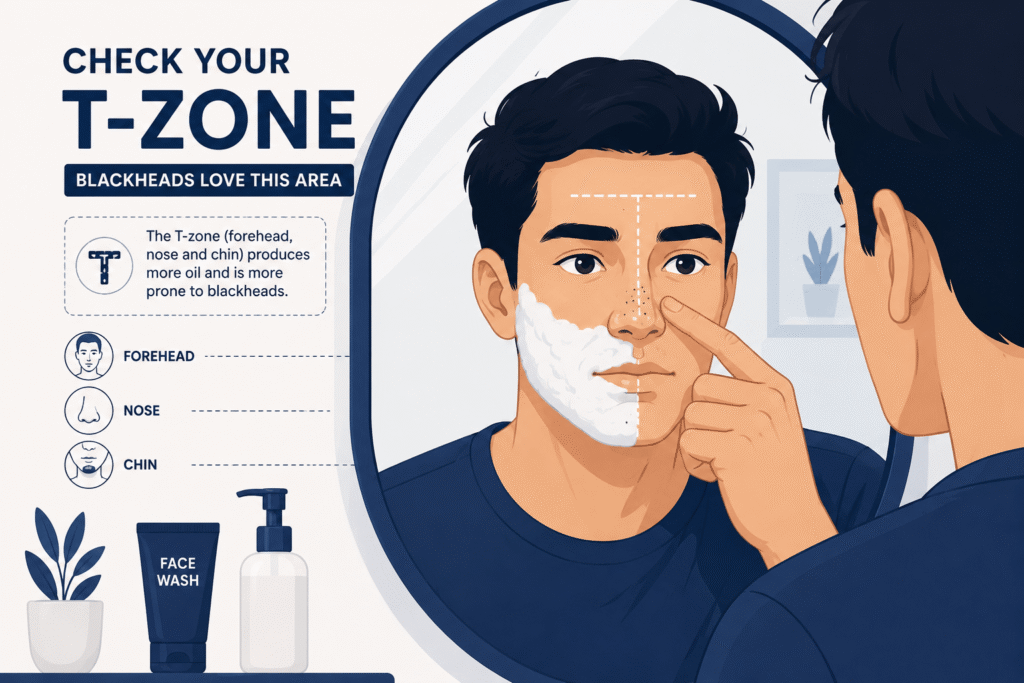
Best for: Oily skin, combination skin, blackhead-prone T-zones.
How to use: Start with a 0.5% concentration if you are new to acids. Use once daily, preferably at night. Always follow with moisturizer and sunscreen.
Benzoyl Peroxide — For Inflamed Acne
Benzoyl peroxide is primarily known for treating red, inflamed pimples, but it also helps prevent comedones from becoming inflamed. It works by releasing oxygen into the pore, which kills Cutibacterium acnes (the bacteria linked to acne).
What the science says: Concentrations of 2.5% to 5% are as effective as 10% but with less irritation. It is particularly useful if your whiteheads frequently turn into red bumps.
Best for: Acne-prone skin that experiences both comedones and inflamed pimples.
Caution: Benzoyl peroxide can bleach fabrics. Use white towels and pillowcases. It may also cause dryness, so pair it with a non-comedogenic moisturizer.
Glycolic Acid (AHA) — Surface Renewal
Glycolic acid is an alpha-hydroxy acid (AHA) derived from sugar cane. It exfoliates the top layer of skin, helping to prevent dead cells from falling into pores and forming new comedones. While it does not penetrate as deeply as salicylic acid, it improves overall skin texture and helps fade dark marks left by old pimples.
Best for: Dull skin, post-acne dark spots, and maintaining clarity after blackheads are cleared.
Niacinamide — Pore & Oil Control
Niacinamide (vitamin B3) does not unclog pores directly, but it is one of the best supporting ingredients for acne-prone skin. It regulates sebum production, strengthens the skin barrier, and reduces inflammation. Over time, this means fewer new blackheads and less oily shine.
What the science says: A 2% to 5% concentration has been shown to reduce sebum excretion rate and improve pore appearance.
Best for: All skin types, especially oily and combination skin.
Tea Tree Oil — Natural Antibacterial
Tea tree oil has natural antimicrobial and anti-inflammatory properties. At concentrations of 5%, it has been shown to reduce mild to moderate acne. It is a gentler alternative for those who cannot tolerate benzoyl peroxide.
Best for: Sensitive skin, natural skincare preferences, mild comedonal acne.
Caution: Never apply undiluted tea tree oil directly to skin. It must be formulated into a face wash or carrier product at safe concentrations.
Charcoal & Clay — Oil Absorption
Activated charcoal and clay (kaolin or bentonite) work like magnets for excess oil. They absorb sebum from the skin’s surface and can help draw impurities from the upper part of the pore. However, they do not dissolve deep clogs the way salicylic acid does.
Best for: Very oily skin, weekly deep-cleansing routines, combination with chemical exfoliants.
Reality check: Charcoal face washes are popular, but they work best as supporting players, not solo treatments for stubborn blackheads.
What to AVOID in Your Face Wash
| Ingredient | Why to Avoid |
|---|---|
| Alcohol (denatured/SD alcohol) | Strips natural oils, triggers more sebum production, damages skin barrier |
| Harsh physical scrubs (walnut shells, apricot pits) | Cause micro-tears, push bacteria deeper, worsen inflammation |
| Fragrance (synthetic) | Common irritant for sensitive and acne-prone skin |
| Coconut oil, cocoa butter | Highly comedogenic; can clog pores further |
| Sodium lauryl sulfate (SLS) | Over-drying; disrupts skin’s acid mantle |
How to Choose the Right Face Wash for Your Skin Type
Finding the right face wash for whiteheads and blackheads starts with knowing your skin type. One formula does not work for everyone. Your skin type determines which active ingredients will help—and which will harm.
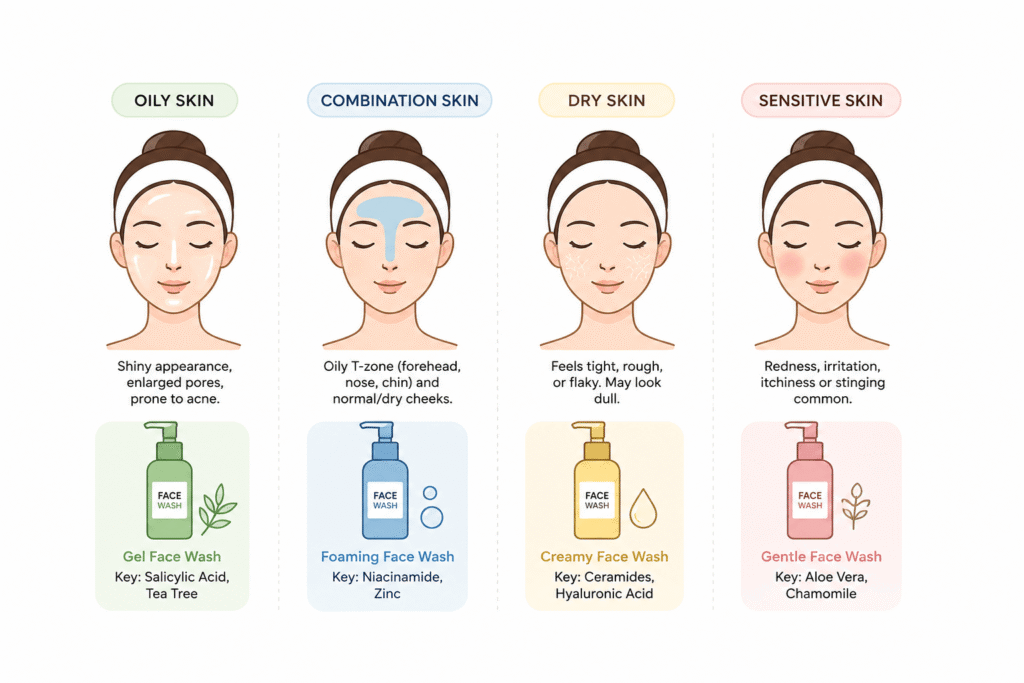
Oily & Acne-Prone Skin
Your profile: Shiny T-zone, enlarged pores, frequent blackheads and whiteheads, makeup slides off by midday.
What to look for:
- Salicylic acid (1%–2%) as the primary active
- Niacinamide (2%–5%) for oil control
- Lightweight gel or foam texture
- Non-comedogenic label
What to avoid: Cream-based cleansers, heavy oils, SLS-heavy foaming cleansers that over-dry.
Routine tip: Wash twice daily. If your skin feels tight after cleansing, your face wash is too harsh. Switch to a lower-strength formula.
Combination Skin
Your profile: Oily T-zone (forehead, nose, chin) but normal or dry cheeks.
What to look for:
- Salicylic acid (0.5%–1%) for the T-zone
- Gentle, pH-balanced formula that won’t dry out cheeks
- Niacinamide to balance oil without stripping moisture
Routine tip: You can use a stronger cleanser on the T-zone and a milder one on the cheeks, or use one balanced formula all over and adjust your moisturizer by zone.
Dry & Acne-Prone Skin
Your profile: Flaky patches, tight feeling after washing, but still prone to small whiteheads—especially on the forehead and chin.
What to look for:
- Low-dose salicylic acid (0.5%) or mandelic acid (gentler AHA)
- Hyaluronic acid or ceramides in the formula to prevent dryness
- Cream or lotion cleanser texture
- Fragrance-free
What to avoid: High-strength benzoyl peroxide, foaming cleansers, anything that leaves your skin feeling “squeaky clean.”
Warning Box: Squeaky clean skin is damaged skin. That tight feeling means your barrier is compromised. A damaged barrier produces MORE oil to compensate, leading to more blackheads.
Sensitive Skin
Your profile: Easily reddened, stings or burns with new products, reacts to fragrance and strong actives.
What to look for:
- Low-strength salicylic acid (0.5%) used every other day
- Tea tree oil at safe concentrations
- Fragrance-free, dye-free, hypoallergenic formulas
- Patch test everything
Routine tip: Introduce one active ingredient at a time. Wait one week before adding another. If irritation occurs, stop immediately and switch to a barrier-repair cleanser with ceramides.
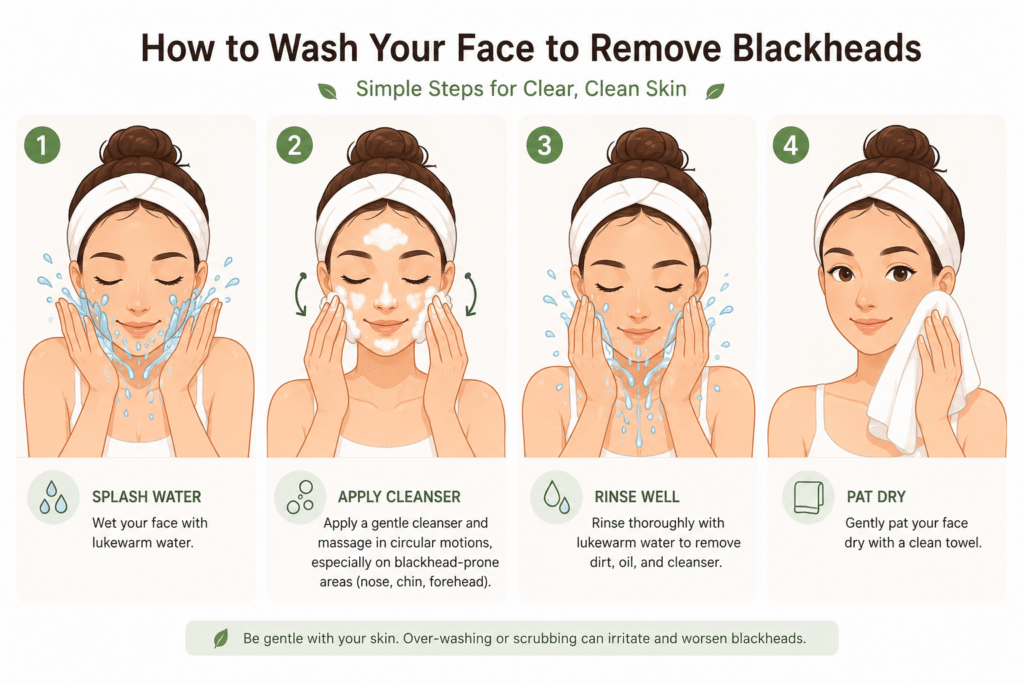
How to Use Face Wash for Whiteheads and Blackheads (Step-by-Step)
Even the best face wash will underperform if you use it wrong. Here is the dermatologist-backed method for maximum results.
The Double-Cleanse Method for Clogged Pores
If you wear sunscreen or makeup, a single wash is not enough. Oil, SPF, and pollution form a layer that water-based cleansers struggle to break down.
Step 1: Use an oil-based cleanser or micellar water to dissolve sunscreen and surface oil.
Step 2: Follow with your salicylic acid or active face wash to clean inside the pores.
For beginners: If double-cleansing feels like too much, start with just your active face wash. Add the oil cleanser later once your skin adjusts.
How Often Should You Wash?
| Skin Type | Morning | Night | Notes |
|---|---|---|---|
| Oily | Yes | Yes | Can add a midday rinse if very oily |
| Combination | Yes | Yes | Focus on T-zone at night |
| Dry | Lukewarm water only | Yes with active cleanser | Avoid over-cleansing |
| Sensitive | Yes (gentle) | Yes (gentle) | Skip actives on irritated days |
The golden rule: Washing more than twice daily does not prevent blackheads. It damages your skin barrier and triggers rebound oil production.
Common Mistakes That Make Blackheads Worse
- Scrubbing with physical exfoliants. Walnut scrubs and brushes create micro-injuries that inflame pores and worsen acne.
- Using hot water. Hot water strips natural oils and dilates pores temporarily, making them appear larger. Use lukewarm water only.
- Skipping moisturizer. Even oily skin needs hydration. Without it, your skin overproduces oil to compensate.
- Expecting instant results. Active ingredients need 4 to 8 weeks to show visible improvement. Consistency beats intensity.
- Popping or squeezing. This pushes bacteria deeper, spreads inflammation, and causes dark spots and scars.
Myth vs. Fact: Blackheads & Whiteheads
Misinformation about blackheads is everywhere. Let us set the record straight with facts backed by dermatology.
Myth 1: Blackheads Are Caused by Dirt
Myth: “My nose is dirty—that is why I have blackheads.”
Fact: Blackheads are oxidized sebum and dead skin cells, not dirt. The dark color comes from melanin and lipids reacting with oxygen. You cannot scrub them away with soap. You need chemical exfoliation to dissolve the plug from within.
Myth 2: Scrubbing Harder Removes Blackheads
Myth: “If I exfoliate aggressively, the blackheads will come out.”
Fact: Harsh scrubbing damages the skin barrier, causes micro-tears, and triggers inflammation. Inflamed pores produce more oil and trap more debris. Gentle chemical exfoliation (salicylic acid, glycolic acid) is the only safe way to clear comedones.
Myth 3: You Can Shrink Pores Permanently
Myth: “This toner will shrink my pores to nothing.”
Fact: Pore size is determined by genetics and collagen levels. You cannot change their physical size. However, keeping pores clear of debris makes them appear smaller. Retinoids and niacinamide can improve pore appearance over time by increasing collagen and reducing oil.
Myth 4: Natural Remedies Alone Can Cure Blackheads
Myth: “Lemon juice, baking soda, and toothpaste will clear my skin.”
Fact: Lemon juice is highly acidic and phototoxic (causes burns in sunlight). Baking soda disrupts skin pH. Toothpaste contains irritants like menthol and fluoride. None of these treat the root cause of comedones. They often make skin worse.
Warning Box: If you have tried over-the-counter face washes for 8 to 12 weeks without improvement, or if your blackheads are painful, inflamed, or leaving scars, see a dermatologist. Prescription retinoids (tretinoin, adapalene) and professional extractions may be necessary.
Men’s Guide: Face Wash for Whiteheads and Blackheads
Men’s skin is 20% to 25% thicker than women’s, with larger pores and more active sebaceous glands. This means men are often more prone to blackheads—especially on the nose, chin, and around the beard area.
Why Men’s Skin Needs a Different Approach
- Higher testosterone levels increase sebum production
- Thicker stratum corneum means actives penetrate differently
- Shaving irritation can mimic or worsen acne
Shaving & Blackheads: What to Know
Shaving over active blackheads or whiteheads can push bacteria into the hair follicle, causing razor bumps and deeper infections.
Best practices:
- Shave after cleansing, not before
- Use a salicylic acid face wash before shaving to soften the skin and clear pores
- Avoid alcohol-based aftershaves—they dry and irritate
- If blackheads cluster around the beard, consider switching to an electric trimmer until the area clears
For men with very oily skin: A face wash with salicylic acid (2%) used morning and night is usually well-tolerated due to thicker skin. Pair with a lightweight, oil-free moisturizer.
Can a Face Wash for Whiteheads and Blackheads Remove Them Completely?
Many people ask: can a face wash for whiteheads and blackheads completely clear my skin? This is the question most readers are really asking. Let us be honest.
What Face Wash CAN Do
- Dissolve existing comedones over 4–8 weeks with consistent salicylic acid use
- Prevent new blackheads and whiteheads by keeping pores clear
- Reduce surface oil that contributes to clogging
- Prepare skin for other treatments by maintaining a clean, balanced canvas
What Face Wash CANNOT Do
- Remove deep, stubborn blackheads instantly. Professional extractions or comedone removal tools (used by experts) are needed for this.
- Shrink pores permanently. Only procedures like laser or microneedling can alter pore structure.
- Treat hormonal acne. If your acne is driven by hormones, topical face wash alone will not be enough.
- Fade deep acne scars. Face wash helps prevent new marks but does not remove existing scars.
When to Add Exfoliants, Retinoids, or See a Dermatologist
| Your Situation | Recommended Next Step |
|---|---|
| Mild blackheads/whiteheads only | Salicylic acid face wash + consistent routine |
| Frequent new comedones + occasional pimples | Add a 2.5% benzoyl peroxide leave-on treatment |
| Stubborn blackheads after 8 weeks | Add adapalene 0.1% (OTC retinoid) at night |
| Painful, cystic, or scarring acne | See a dermatologist for prescription tretinoin or oral medication |
| Dark spots from old pimples | Add niacinamide 5% serum + daily sunscreen |
Expert Tip: Sunscreen is non-negotiable when using acids or retinoids. These ingredients increase photosensitivity, meaning your skin burns faster and dark spots worsen without SPF protection. A non-comedogenic SPF 30+ sunscreen every morning is essential.
Frequently Asked Questions
Can salicylic acid face wash remove blackheads permanently?
No. Salicylic acid dissolves existing blackheads and prevents new ones. But it only works while you use it. Stop the routine, and blackheads return if the underlying cause (excess oil, dead skin buildup) is still there. Think of it like brushing your teeth — consistency matters.
How long does it take for face wash to clear whiteheads?
4 to 8 weeks. Skin cell turnover takes about 28 days. Salicylic acid and other actives need at least one full cycle to unclog pores and show visible change. Do not switch products every few days. Stick with one formula for two months before judging results.
Is charcoal face wash good for blackheads?
Charcoal absorbs surface oil well. It helps if you have very oily skin. But it does not dissolve deep pore clogs like salicylic acid does. Use charcoal as a secondary cleanser — maybe a few times a week — not your main blackhead treatment.
Can I use face wash with benzoyl peroxide every day?
Yes, if your skin tolerates it. Start with 2.5% every other day. Increase to daily once your skin adjusts. Benzoyl peroxide can bleach towels and cause dryness. Use white linens and always moisturize after.
What’s the difference between whiteheads and blackheads?
Both are clogged pores. The difference is the opening.
| Feature | Blackheads | Whiteheads |
|---|---|---|
| Pore status | Open | Closed |
| Color | Dark (oxidized) | White or flesh-colored |
| Texture | Slightly raised | Small bump under skin |
| Cause | Oxidized sebum + dead cells | Trapped sebum with no air exposure |
Should I use a scrub or face wash for blackheads?
Face wash with chemical exfoliants. Scrubs with walnut shells or beads create micro-tears. They irritate pores and can push bacteria deeper. Chemical exfoliation (salicylic acid, glycolic acid) is gentler and more effective.
Can men use the same face wash for blackheads as women?
Yes. The active ingredients work the same way. Men’s skin is thicker and oilier, so they often tolerate higher-strength formulas (2% salicylic acid) better. The key is matching the ingredient to your skin concern, not your gender.
Will face wash help with pimples and dark spots too?
Some face washes do. Benzoyl peroxide fights active pimples. Niacinamide and glycolic acid help fade dark spots over time. But face wash stays on skin for only 30–60 seconds. For serious dark spots, add a leave-on serum with vitamin C or niacinamide.
How do I know if my face wash is making my skin worse?
Watch for these signs:
- Increased redness or burning
- New breakouts in areas you never had them
- Skin feels tight or flaky after washing
- Oiliness returns within an hour
If you see these, your cleanser is too harsh. Switch to a gentler formula. Barrier damage causes more acne, not less.
Are expensive face washes better for blackheads?
Not necessarily. A ₹300 face wash with 2% salicylic acid works the same as a ₹3,000 one with the same ingredient. Price often reflects branding, packaging, and added fragrance — not better results. Check the ingredient list, not the price tag.
Can I use two different face washes for morning and night?
Yes. Many people do.
| Time | Best Choice |
|---|---|
| Morning | Gentle, hydrating cleanser or just water |
| Night | Active cleanser with salicylic acid or benzoyl peroxide |
This prevents over-exfoliation while keeping pores clear.
What foods cause whiteheads and blackheads?
No single food causes acne for everyone. But some patterns show up in research:
- High-glycemic foods (white bread, sugary drinks) spike insulin and oil production
- Dairy — especially skim milk — links to acne in some studies
- Whey protein supplements can trigger breakouts in gym-goers
Diet is one factor among many. Genetics, hormones, and skincare habits matter more.
Is it okay to pop whiteheads?
No. Popping pushes bacteria deeper. It causes inflammation, infection, and dark spots. It can also lead to pitted scars that are permanent. If a whitehead is ready, a hydrocolloid patch can draw it out safely. Leave extractions to professionals.
How does Indian climate affect blackheads?
India’s hot, humid climate increases sweat and sebum production. Pollution particles stick to oily skin and clog pores. Hard water in many Indian cities leaves mineral residue that irritates skin.
Tips for Indian weather:
- Wash your face after sweating heavily
- Use a gentle cleanser — harsh ones worsen barrier damage in humidity
- Never skip sunscreen — UV darkens post-acne marks
- Consider a water softener if your tap water is very hard
When should I see a dermatologist for blackheads?
Book an appointment if:
- Over-the-counter face washes fail after 10–12 weeks
- Blackheads become painful, red, or inflamed
- You notice scarring or dark spots forming
- Acne appears suddenly in adulthood (possible hormonal issue)
- You have cystic lumps under the skin
A dermatologist can prescribe tretinoin, adapalene, or azelaic acid. They can also perform safe professional extractions.
If over-the-counter treatments do not work, the American Academy of Dermatology recommends seeing a board-certified dermatologist for prescription options.
Key Takeaways
- Blackheads are oxidized sebum, not dirt. Scrubbing harder will not help.
- Salicylic acid (BHA) is the most effective ingredient for whiteheads and blackheads. Look for 0.5% to 2%.
- Match your face wash to your skin type — oily skin needs stronger actives; dry and sensitive skin needs gentler formulas.
- Consistency beats intensity. Give any new face wash 8 weeks before judging results.
- Never skip moisturizer — even oily skin needs hydration. A damaged barrier produces more oil.
- Avoid physical scrubs, lemon juice, baking soda, and toothpaste. These damage skin and worsen acne.
- Sunscreen is mandatory when using acids. It prevents dark spots from old pimples.
- See a dermatologist if over-the-counter products fail after 10–12 weeks.
Conclusion
Whiteheads and blackheads are frustrating. They seem small, but they refuse to leave. The good news is that the right face wash for whiteheads and blackheads — used correctly and consistently — can clear your pores and prevent new ones from forming.
The key is knowing what to look for (salicylic acid, niacinamide, the right texture for your skin type) and what to avoid (harsh scrubs, drying alcohols, unrealistic expectations). Most people fail not because their skin is unfixable, but because they switch products too often, scrub too hard, or skip the basics like moisturizer and sunscreen.
Start with one active ingredient. Be patient for two months. Protect your skin barrier. And if nothing changes, a dermatologist has stronger tools that work.
Clear skin is not about perfection. It is about the right routine, followed with patience.